

One Linlithgow has welcomed a new and improved approach to make sure West Lothian has a clean, safe and welcoming environment for everyone
West Lothian Council have backed the adoption of new Service Standards within its Cleaner Communities Team, as well as a new Litter Prevention Action Plan (LPAP) for 2026/27. FULL REPORT TO READ IS HERE
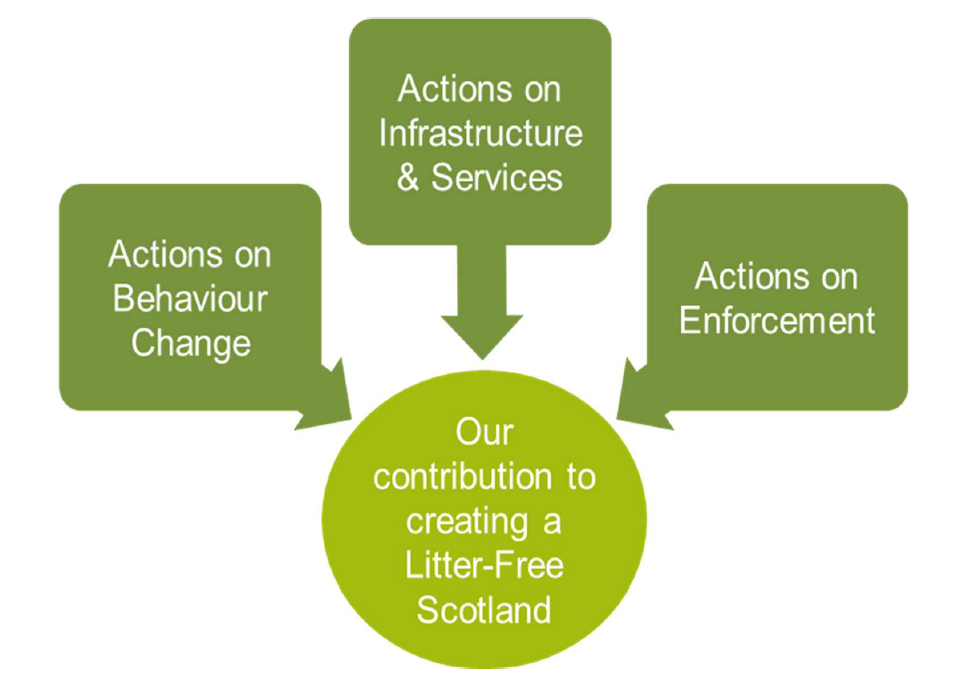
The standards set out how the council will work to tackle environmental issues such as littering, fly tipping, graffiti, dog fouling and more, through a combination of education, enhanced infrastructure, community engagement and more stringent enforcement.
The area has already seen an improvement in performance in the independent litter audits from Keep Scotland Beautiful, increasing to 90.2% in January 2026.
The introduction of new service standards for both proactive and responsive work, appointment of an external contractor and modernisation of the Urban Clean Team is expected to lead to further progress in the future.

Executive councillor for the environment and sustainability Tom Conn said: “I welcome this new focus on West Lothian’s environment, which takes a holistic approach to try and tackle the challenges.
“By using a mix of education, improving infrastructure, engaging with our communities and carrying out strict enforcement, we hope to continue to see improvements in the environment we all share.
“It’s not acceptable that the council continues spend £2.9 million every year to tackle issues like litter or fly tipping, along with the volunteers like West Lothian Litter Pickers who give up their free time, all to address something that simply shouldn’t happen in the first place.
“We all need to take pride in our fantastic local environment and do all we can to discourage the selfish minority who choose to litter or fly tip.”
One Linlithgow, the town’s Business Improvement District, was sent the full report to inform all businesses about the new service standards for Cleaner Communities.
It has been circulated to all levy paying businesses with a clear message that we all must do our bit to maintain and improve the standards of the look of our beautiful High Street.
This includes following the guidelines for trade waste on the High Street, business signage and outside seating.
Key Points in the Report.
Flyposting – all unauthorised posters and advertisements placed on council property will be removed as part of routine environmental maintenance or in response to reports.
Dog Fouling – will continue to be dealt with on as reactive basis and will respond to intelligence led reports by adjusting patrol routes when resources allow.
Graffiti – Offensive graffiti on council owned property will be removed within 48 hours of reporting. Other graffiti will be removed within 10 days where resource allow.
Commercial/ Trade Waste – To improve communications with local businesses to prevent instances of footpath obstruction and/ or side waste.
Table & Chair Permits – will ensure business holders hold a valid permit for tables and chairs on footpaths or open space. Without a permit, businesses will receive a fine.
Grades of Cleanliness and Zoning
The Code of Practice is based on the concept of four standards, or grades, of cleanliness for cleaner communities:
Grade A: no litter or refuse.
Grade B: predominantly free of litter and refuse, apart from a few small items.
Grade C: consistent distribution of litter and refuse with minor accumulations;
Grade D: heavily littered with significant accumulations.
Cleanliness is assessed based on the presence of litter and refuse and categorised into four grades.
A new KPI will be introduced to measure this standard from the time an enquiry is logged, handled and closed off.
Litter Prevention Action Plan
This is the Council’s commitment to creating a cleaner, greener, and more sustainable local environment. The plan takes a proactive, preventative approach, recognising that tackling the root causes of littering and fly tipping is more effective and sustainable than solely relying on reactive cleaning services.
It focuses on changing behaviours, strengthening partnerships, and improving the visibility and accessibility of waste disposal infrastructure.
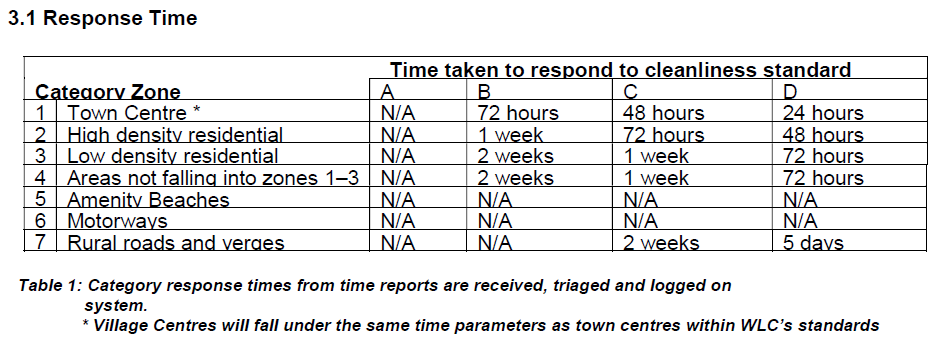
The Code of Practice on Litter and Refuse divides land into a series of zones
for cleaner communities
Zone 1: Town Centres – Areas with high levels of pedestrian traffic, commercial activity, and regular public use.
Zone 2: High-Density Residential Areas
Zone 3: Low-Density Residential Areas
Zone 4: Other Land Uses
Zones 5 and 6: Beaches and Motorways
Zone 7: Rural Roads and Verges
This zoning system helps inform cleansing priorities, response times, and resource allocation across West Lothian, ensuring that the Council meets its statutory obligations while addressing local environmental needs effectively.
The plan will build on actions taken by the Cleaner Communities Team over the last two years to tackle litter and fly tipping such as:
- The introduction of the ‘Don’t Waste West Lothian’ fly tipping campaign.
- The introduction of three dedicated Glutton street cleaning teams.
- Roll out of mobile CCTV cameras to deter dumping.
- The introduction of smart compactor bins.
- Partnership working with community litter picking groups
Article published by One Linlithgow